
Choosing the Project Delivery Method for your Project
Every project owner embarking on a construction project must thoroughly determine the project delivery method that will best meet their unique needs, specific goals, and requirements.
However, to attain a successful completion of a project, certain considerations should be taken into account. To know more about this, please read our blog article – Key Project Considerations in Choosing a Project Delivery Method.
What is a Project Delivery Method?
Project Delivery Method is a comprehensive system selected by a project owner for organizing and financing the planning, design, construction, operations, and maintenance services to execute and complete any type of construction project.
A project team generally consists of the owner, designer, and the contractor. A Project Delivery Method clearly defines the contractual relationships of the parties involved, their roles and responsibilities and how each party is related during the entire project life cycle.
Most Common Types of Project Delivery Method
Once the project owner has carefully evaluated the key project considerations then they can effectively choose the right project delivery method that is most suitable for their construction project.
The most commonly used project delivery methods are
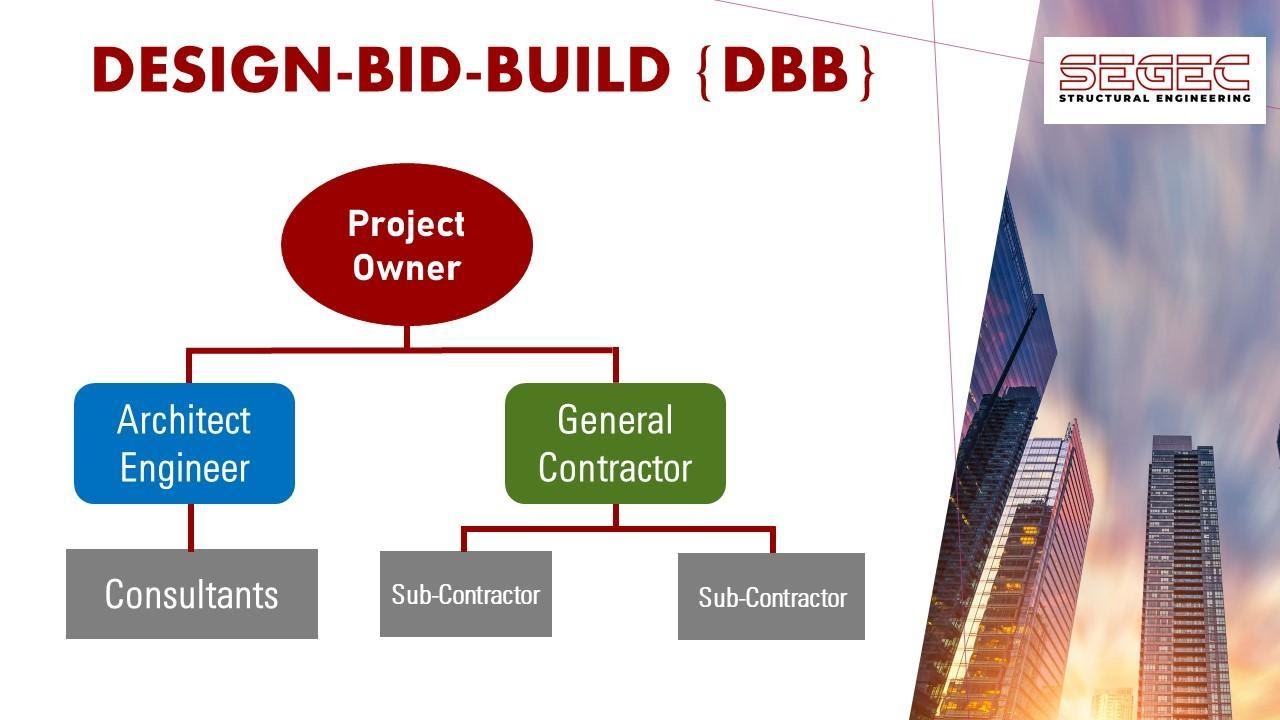
Design – Bid – Build (DBB)
This project delivery method involves three successive phases:
- Design phase, when the project owner hires a designer, either an architect or an engineer to work on the design plan;
- Bid phase, when a contractor with the lowest bid is selected; and
- Construction phase, when the project is built by the selected contractor.
In this traditional type of project delivery method, the designer and the contractor work directly for the project owner under separate contracts which provides the project owner lots of opportunity to direct the project and therefore the project owner has a significant amount of responsibility for the success or failure of the project.
As compared to other delivery methods, the process may have a longer time frame for completion because all design work must be completed prior to the invitation of the construction bids. Construction phase will only commence once the design and procurement phases are complete.
Another drawback of this method is the absence of the construction input into the project design which may limit the effectiveness and constructability of the design plan. There is also no opportunity for collaboration between the designer and the contractor during the design phase. This approach may also cause relational conflicts rather than cooperation and coordination among the contractor, designer and the owner.
Design – Build
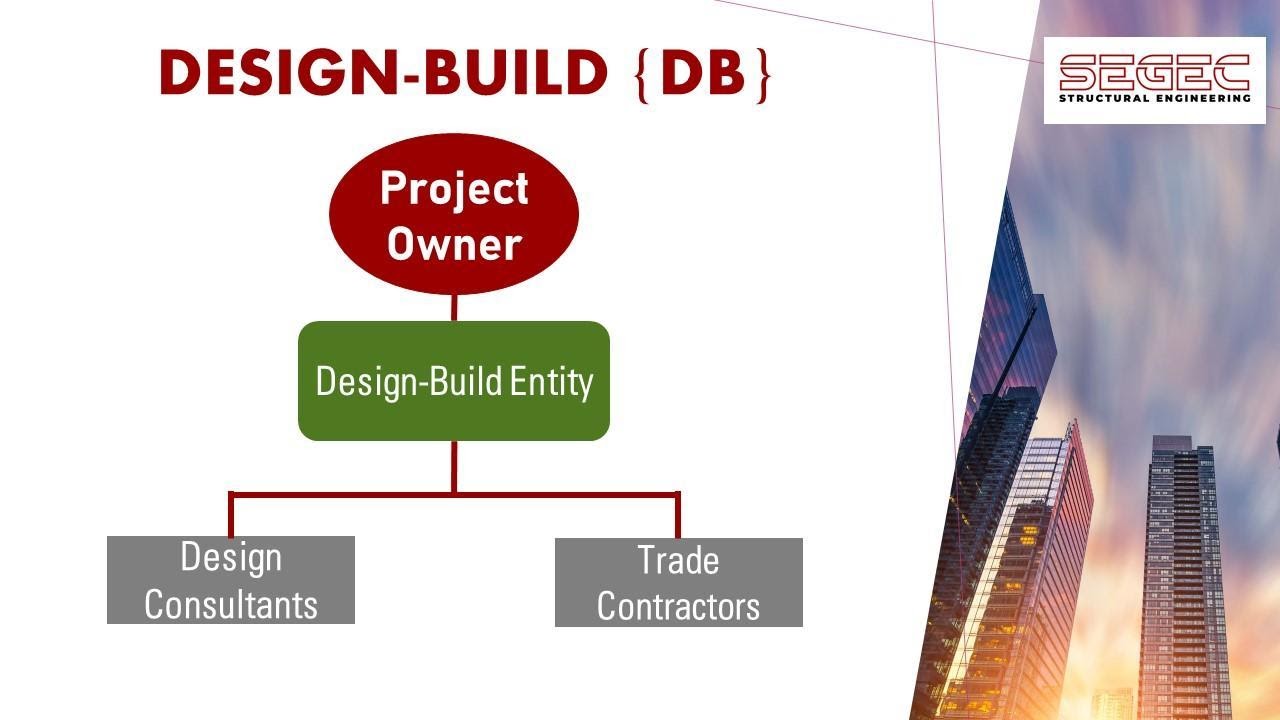
This type of project delivery method creates a very straightforward process for the project owner as only one entity or one firm is contracted by the project owner.
A single contract provides both
- architectural and engineering design services
- construction
The design-builder is responsible to design and construct the project that should meet the performance standards set forth by the project owner stated in the contract. The entire project is managed by either the architect/engineer or the builder/contractor from conception to the completion of the construction project. The design-builder is primarily responsible for tracking down any inconsistency between the established requirements and the performance standards.
When the design team and build team are rolled into one operation, the project becomes more efficient and minimizes risks. Project delivery and completion is expected to be faster and on schedule which results in cost savings.
As a drawback, project owners will have less control and input during the design and construction process. With this, project owners must be willing to allow the design-builder team to handle the design plan details.
It is imperative therefore that project owners conduct an in-depth assessment in selecting the right firm to execute their construction project and provide a detailed agreement specifying their requirements and performance expectations.
Construction Management at Risk (CMR)
In this delivery method, the project owner hires an expert construction manager (CM manager) to oversee the overall completion of the construction project, and acts as the project owner’s representative during the design phase and the construction phase. The CMR manager warrants delivery of the construction performance within a defined schedule and on either a fixed or guaranteed maximum price (GMP).
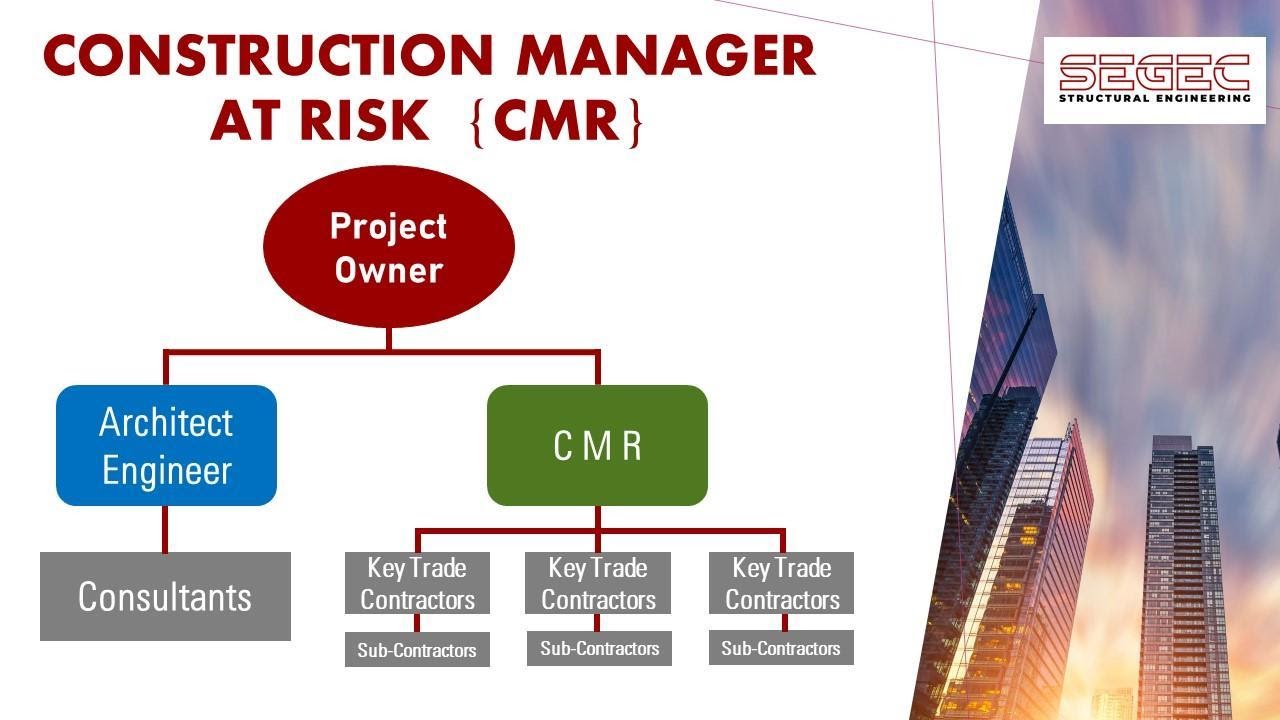
If construction costs exceed the agreed budget, then the CMR manager is expected to cover such costs. However, if the project resulted in cost savings, then the CMR manager will earn it as additional profit unless the contract calls for sharing the savings with the project owner.
With the CMR delivery method, the project owner is able to incorporate the builder’s perspective and insights to planning and design decisions. Consequently, project costs are controlled and project completion is fast-tracked.
A drawback of CMR delivery is that the project owner has the sole responsibility for the completeness of the design plan. Additionally, the lack of collaboration between the contractor and designer, and possible disagreements with either the designer or the CMR manager which will impact project timelines and costs.
Multi-Prime
If you are a project owner who is experienced in managing construction projects and prefers to be more in control, then the Multi-prime project delivery method will work best for you.
This delivery method has three sequential phases:
- design
- engineering
- construction
The project owner carries out a General Contractor role and has control over the entire process of the construction project. Separate contracts with the designer, multiple prime and or specialty contractors are executed. The designer and all other contractors work directly with the project owner.
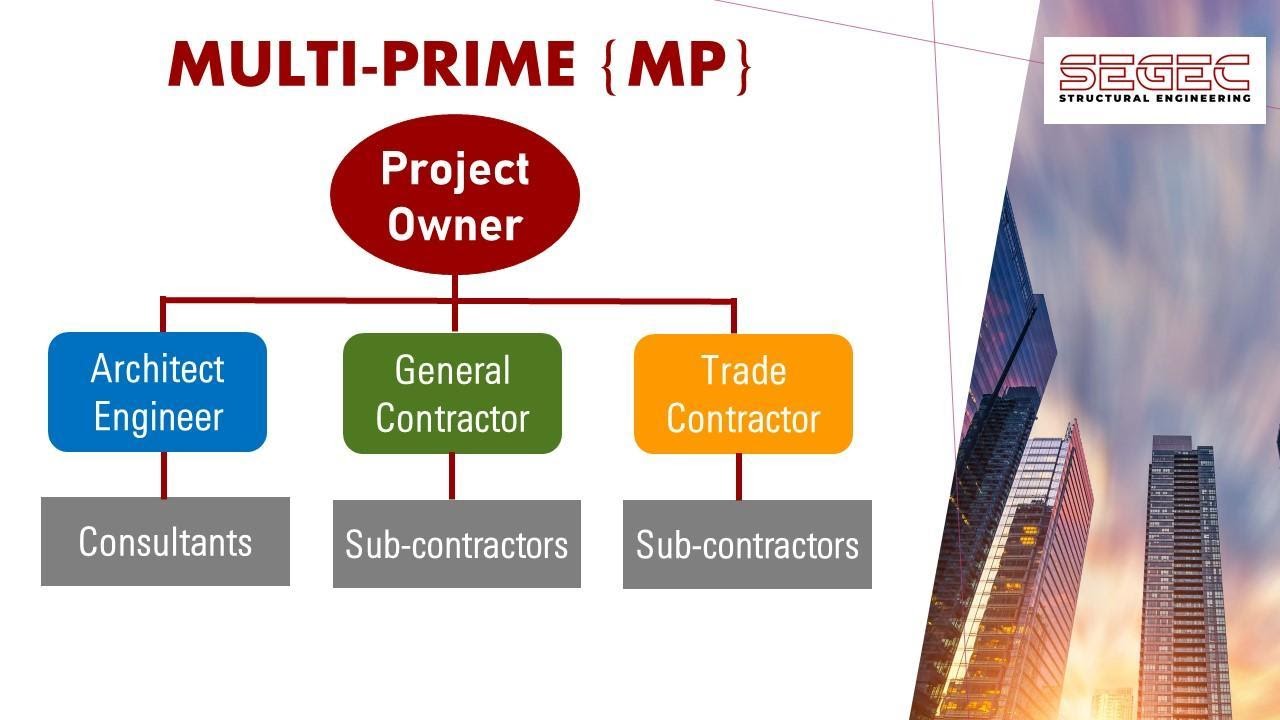
A drawback of the Multi-prime delivery method is that there is no central point person to coordinate with all contractors during construction and the overall authority to dictate the schedule of another contractor which may delay project completion and increase costs. There is also no opportunity for collaboration among all contractors. Moreover, final project cost is undeterminable until all contracts are concluded. The project owner takes full responsibility for the success or failure of the project.
Which Project Delivery Method is best suited for your project?
As every construction project is different with unique goals and specific requirements, a good decision on choosing the most appropriate project delivery method can only be made after careful evaluation of the type of construction project one is embarking on, the level of control the Project Owner wants, the risks one is willing to take, the project budget and timeline. Along with it, having a profound understanding of the commonly used delivery methods will definitely lead to the successful completion of the construction project.
We can assist you with your construction project
Southeast Gateway Engineering and Construction Corp. work with clients to help determine the project delivery method that’s best suited for their projects. Book your FREE INITIAL CONSULTATION now with our licensed structural engineer by filling in the contact form below.
You can also view our list of offered services.


Have a question? Let's talk
Complimentary initial consultation
Send us a quick request and we will contact you to schedule a complimentary initial consultation.